Aakar

Shaping Population, Strengthening Communities, Sustaining the Future.

Community-driven initiative promoting family planning and reproductive health to achieve population stabilisation and sustainable development

Our Footprint

Districts
0
Villages
0
ASHAs & ANMs Trained
0
Impacted Population
0 Cr
Blocks
0 +
Permanent FPCC setup
0 +
Clients Counseled by FPCC
0 +
Service Availed
0 +

Overview​

Project Aakar is a large-scale population stabilisation and family planning initiative led by the Mobius Foundation in partnership with the Population Foundation of India (PFI) and Janani. Designed to strengthen public health systems and expand equitable access to family planning and sexual and reproductive health (SRH) services, the project focuses on underserved districts in Uttar Pradesh and Bihar. Currently operational across 2 states, 9 districts, and over 7,000 villages, Project Aakar adopts a systems-strengthening approach enhancing access to modern contraceptive services, building the capacity of frontline health workers, promoting male participation, generating community awareness, and addressing early marriages and teenage pregnancies.

Launched in 2023 as a pilot through UMMEED 1, the programme expanded under UMMEED 2 across eight districts in Uttar Pradesh (including Siddharthnagar) and one district in Bihar (Saran), with further expansion into two additional districts in Bihar. By collaborating closely with district administrations, public health facilities, ASHAs, ANMs, and community institutions, the initiative ensures sustainable, long-term impact while contributing meaningfully to improved maternal and child health outcomes and advancing India’s population stabilisation goals.

How We Do It

Interventions

Umeed 1.0: The Hope for Population Stabilisation

Umeed 1.0 was the first phase of Project Aakar, implemented in Jarwal Block of Bahraich district, Uttar Pradesh. The initiative strengthened family planning systems by improving access to modern contraceptive methods, training frontline health workers, and building district-level coordination mechanisms.Implemented by the Population Foundation of India, the programme combined system strengthening, Social Behaviour Change Communication (SBCC), capacity building, and government convergence to increase contraceptive uptake and community awareness. The lessons from this phase created a strong, scalable foundation for expansion under Umeed 2.0.

Umeed 2.0: Driving Population Stabilisation

Umeed 2.0 is the expansion phase of Project Aakar, designed to deepen impact and strengthen public health systems. The programme scales family planning services while reinforcing government-led mechanisms for long-term ownership.

Key priorities include strengthening District Working Groups (DWGs), expanding services at sub-centre and block levels, ensuring availability of the contraceptive basket, and building the capacity of ASHAs and ANMs. Community engagement through Social Behaviour Change Communication (SBCC), awareness of emergency contraception, and greater male participation are central to the approach.

Implemented across districts in Uttar Pradesh and Bihar, Umeed 2.0 works with the National Health Mission to create a sustainable, scalable model for population stabilisation.

Strengthening Family Planning Access in Siddharth Nagar

Siddharth Nagar, an aspirational district in eastern Uttar Pradesh along the Indo-Nepal border, has a predominantly rural population and challenges in reproductive health services. The district faces high fertility, unmet need for family planning, and limited access to quality services in remote blocks.

Through its partnership with Janani, Mobius Foundation is implementing focused interventions to improve service access, strengthen block-level mechanisms, increase male participation, and expand the use of modern contraceptive methods. These efforts aim to strengthen the district’s public health system and support sustainable population stabilisation.

Family Planning Transformation in Saran District, Bihar

Saran (Chhapra), Bihar, is a key focus area under Project Aakar, implemented with Janani. The densely populated rural district faces challenges such as early marriage, limited access to modern contraceptives, and gaps in public health infrastructure.

The project strengthens family planning and population stabilisation by increasing demand for services, improving health facility systems, ensuring contraceptive availability through stronger supply chains, and mobilising communities through sustained awareness and outreach. These efforts support informed reproductive choices and contribute to long-term improvements in public health and demographic outcomes in the district.

Campaign: Itni Bhi Kya Jaldi Hai

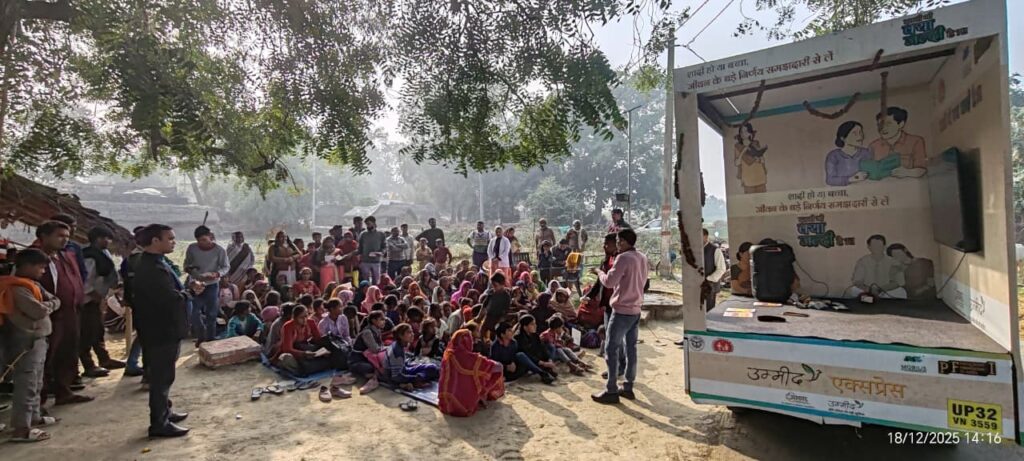
“Itni Bhi Kya Jaldi Hai” is a Social Behaviour Change Communication (SBCC) campaign addressing early marriage and early pregnancy by encouraging families to delay marriage and first childbirth. The campaign promotes education, health, and informed decision-making among young couples, highlighting that planning a family at the right time leads to healthier mothers, healthier children, and stronger futures.

Through community meetings, outreach activities, and local engagement, the campaign challenges social norms and encourages responsible family planning choices.

Campaign: Mard Badlega to Desh Badlega

“Mard Badlega to Desh Badlega” focuses on transforming gender norms by actively engaging men in family planning and reproductive health decisions. Recognising that sustainable population stabilisation requires male participation, the campaign encourages men to take shared responsibility in contraception, spacing methods, and supporting their partners’ health. Through dialogue sessions, community mobilisation, and awareness drives, it promotes positive masculinity and positions men as partners in progress.

Health Melas

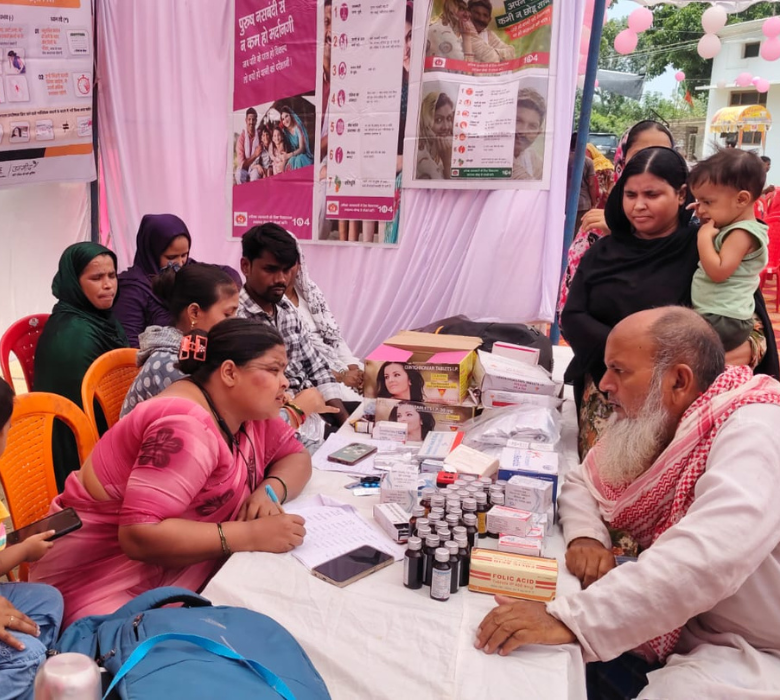
Health Melas across Uttar Pradesh and Bihar bring family planning and reproductive health services closer to communities. These outreach events provide on-site counselling, access to modern contraceptives, referrals for clinical services, and information on maternal and child health.

Organised with district health departments, frontline workers, and local administrations, the melas address awareness gaps, reduce stigma around family planning, and respond to unmet needs—especially among newly married couples and young parents.

By combining service delivery with behaviour change communication, interactive sessions, and male engagement, Health Melas support informed reproductive choices and strengthen trust in the public health system.

Wall Paintings

In Uttar Pradesh, 300 wall paintings have been created as a cost-effective rural communication tool to raise awareness on key reproductive health issues. These paintings convey important messages about contraceptive methods, male involvement in family planning, and the importance of delaying early marriage and childbirth, reaching communities in an engaging and accessible way.

NSV Pakhwada (Annual Campaign)

Every November, Project Aakar leads an intensive No-Scalpel Vasectomy (NSV) Pakhwada to promote male participation in family planning. The campaign uses Nukkad Nataks, LED van screenings, and on-ground counselling to dispel myths and raise awareness about NSV as a safe, permanent contraceptive. Through community engagement, the project provides counselling, distributes contraceptives, and facilitates the complete NSV process—from registration and consent to the procedure and post-operative follow-ups—helping shift public perception and boost male involvement in reproductive health.

Champion Maa Baap Campaign

Running from September 2022 to March 2024 in Shravasti and Bahraich, the Champion Maa Baap Campaign focused on promoting responsible family planning among couples. Through storytelling, community dialogues, and grassroots mobilization, the campaign educated couples on contraceptive options, the benefits of birth spacing, and shared decision-making in reproductive health. Local influencers and Community Champions actively engaged with families, helping build awareness, dispel myths, and encourage informed choices for healthier families and communities.

Kushal Parivar Diwas Participation

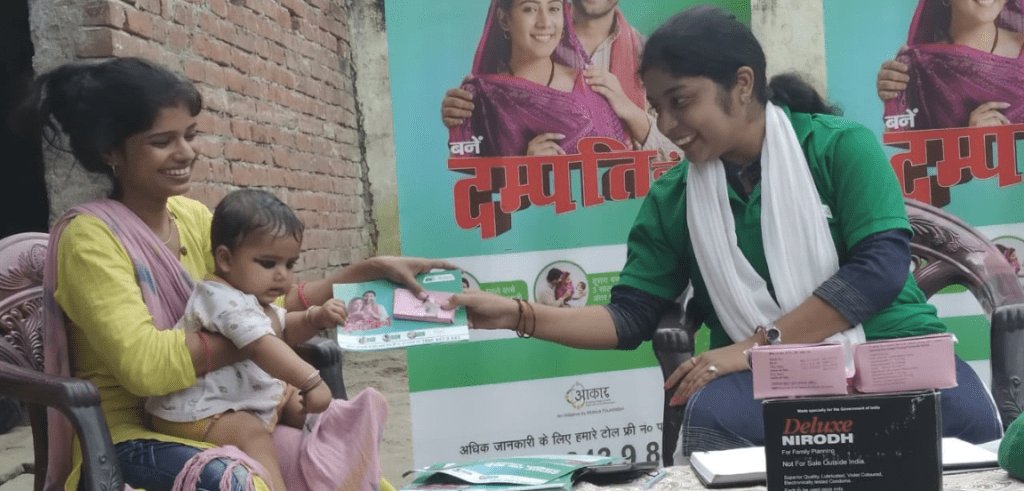
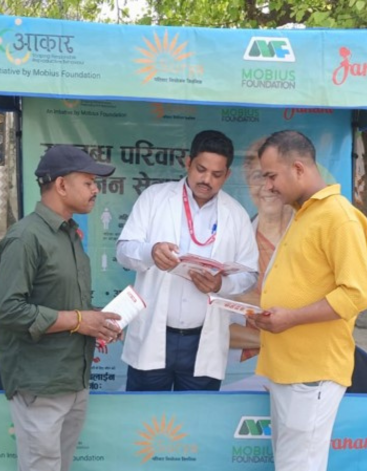
Under Project Aakar, Mobius Foundation actively participates in Kushal Parivar Diwas, a monthly family welfare initiative led by the state health mission. These outreach days provide a platform to engage eligible couples, promote informed family planning choices, and encourage responsible reproductive health practices. Project teams set up FP counselling booths, distribute IEC materials, and conduct follow-up interactions to support continuity of care and ensure uptake of appropriate contraceptive methods.

Stories of Change

Latest Updates

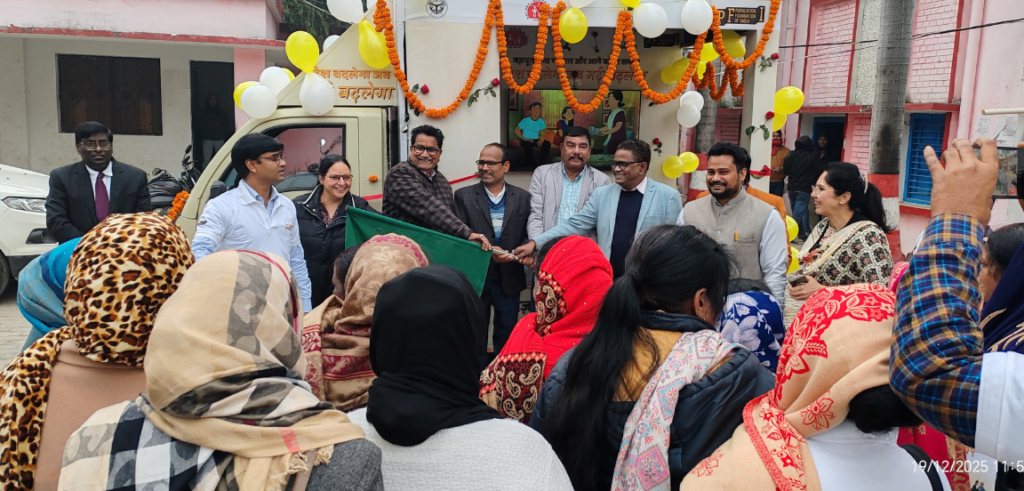
Project Aakar continues to strengthen family planning and adolescent health initiatives across Uttar Pradesh through awareness, accessibility, and collaboration. A Behaviour Change Communication (BCC) meeting in Khairabad brought together officials from Health, Education, and ICDS departments to promote family planning and adolescent well-being. The “Itni Bhi Kya Jaldi Hai” SBCC van engaged youth and community members on reproductive health and early marriage prevention. In Bahraich, a large health camp provided medical consultations, Ayushman cards, and sanitary pads. Additionally, Hope Counselling Corners were launched in partnership with the Population Foundation of India, expanding reproductive health services to ten health units.

Glimpses

Newsroom

Our Partners