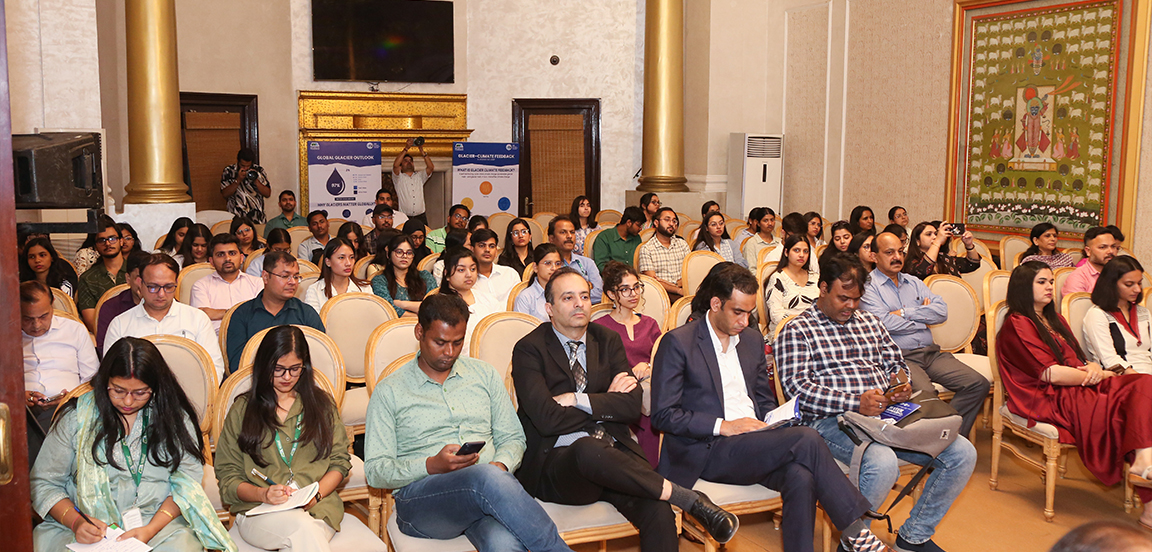
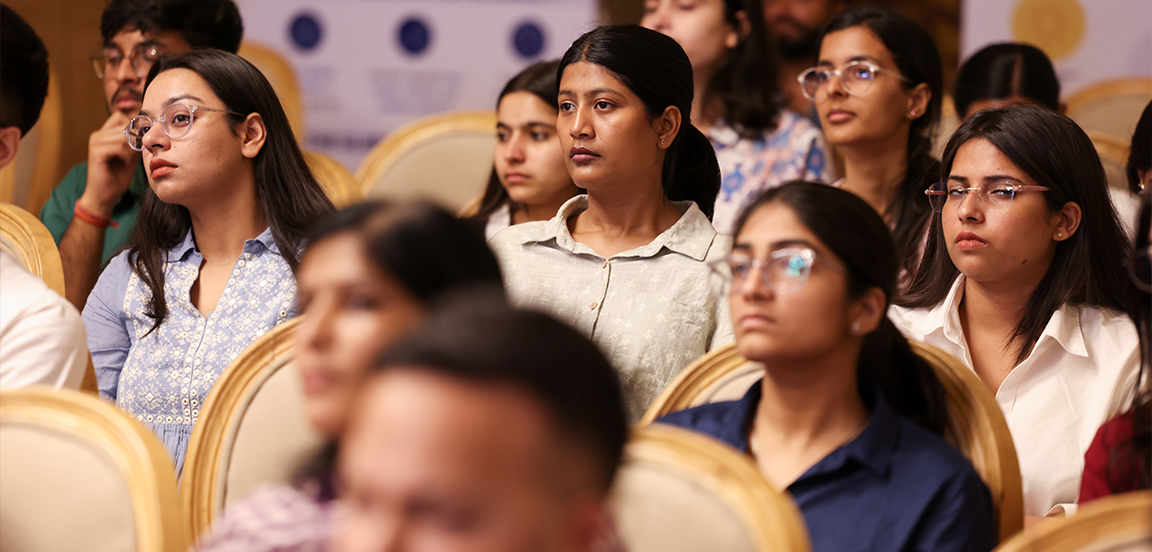
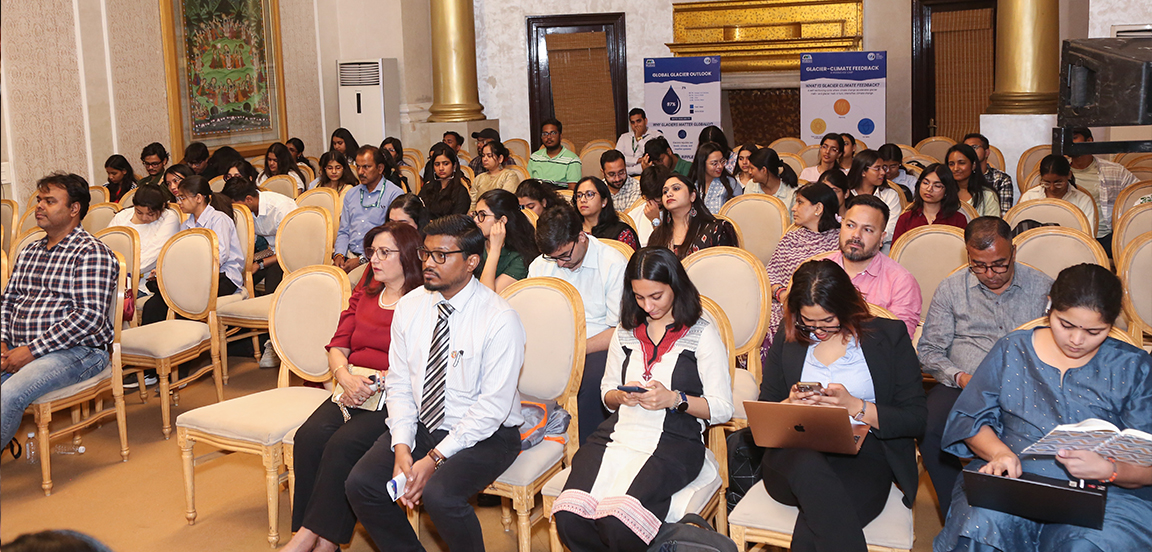
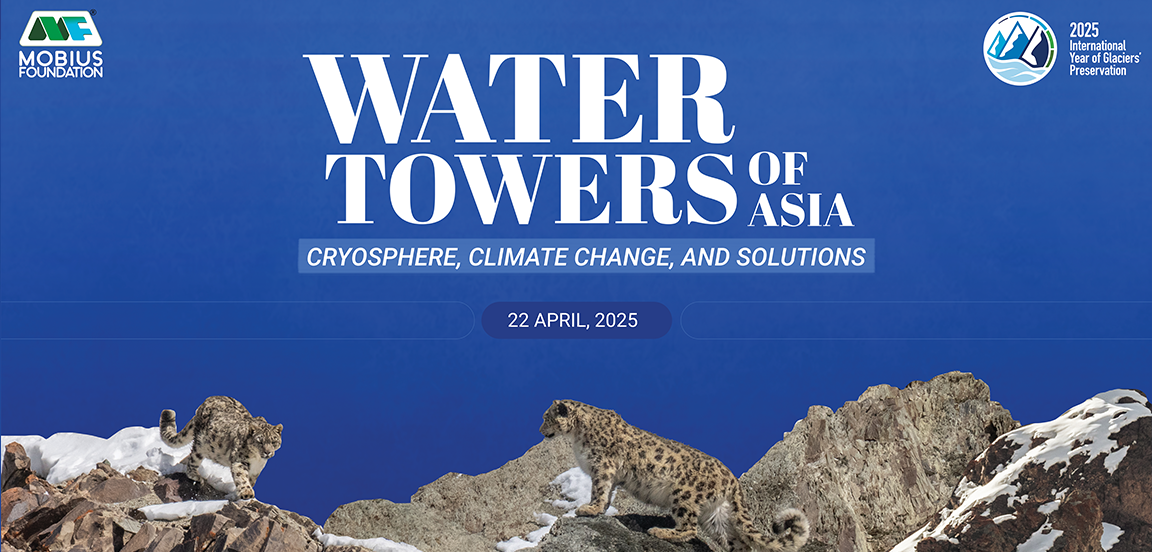
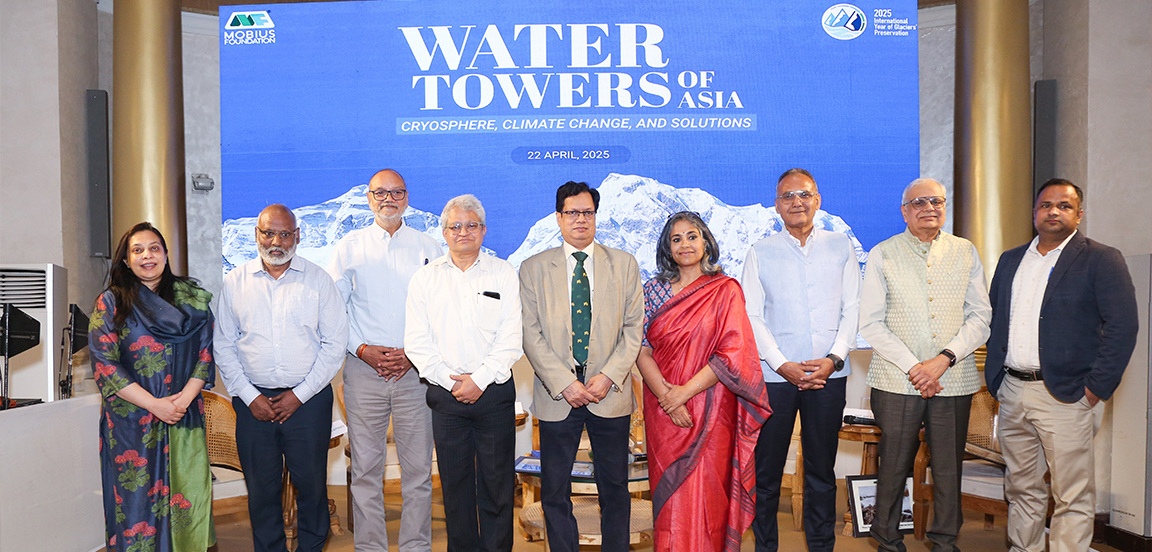
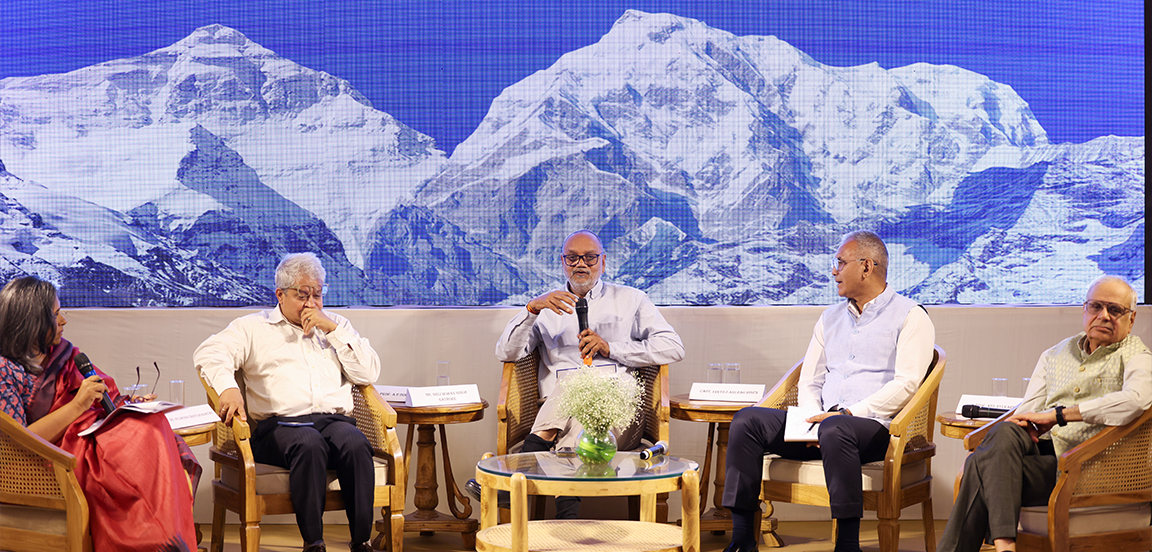
Mobius Foundation organized a panel discussion titled “Water Towers of Asia: Cryosphere, Climate Change, and Solutions” at Bikaner House, New Delhi, to mark the United Nations’ International Year of Glaciers’ Preservation and Earth Day. Experts from science, policy, and environmental advocacy examined the critical retreat of glaciers in the Hindu Kush Himalayan region, known as the Third Pole, where up to one-third of glaciers may vanish by century’s end. This decline threatens seasonal water flows, increases the risk of glacial lake outburst floods, and disrupts monsoon patterns, impacting mountain communities and millions downstream reliant on glacier-fed rivers for drinking water, agriculture, and hydropower.
The panel emphasized that cryosphere changes exacerbate climate instability, causing biodiversity loss, water conflicts, and climate-induced migration. They called for urgent investment in cryosphere monitoring, enhanced local adaptation strategies, and strengthened transboundary cooperation on shared water resources. Additionally, integrating indigenous knowledge into policymaking and prioritizing the resilience of vulnerable mountain populations were identified as essential steps for effective climate response and sustainable management of this critical region.